


In the evolving world of modern architecture and energy-efficient construction, PU insulated roof sandwich panels have become an indispensable material choice for both industrial and residential roofing systems. Among them, Fluted or Great Wall PU insulated roof panels stand out for their structural performance, aesthetic appeal, and energy-saving capabilities. This article explores the structure, benefits, applications, and technical specifications of these advanced building materials.

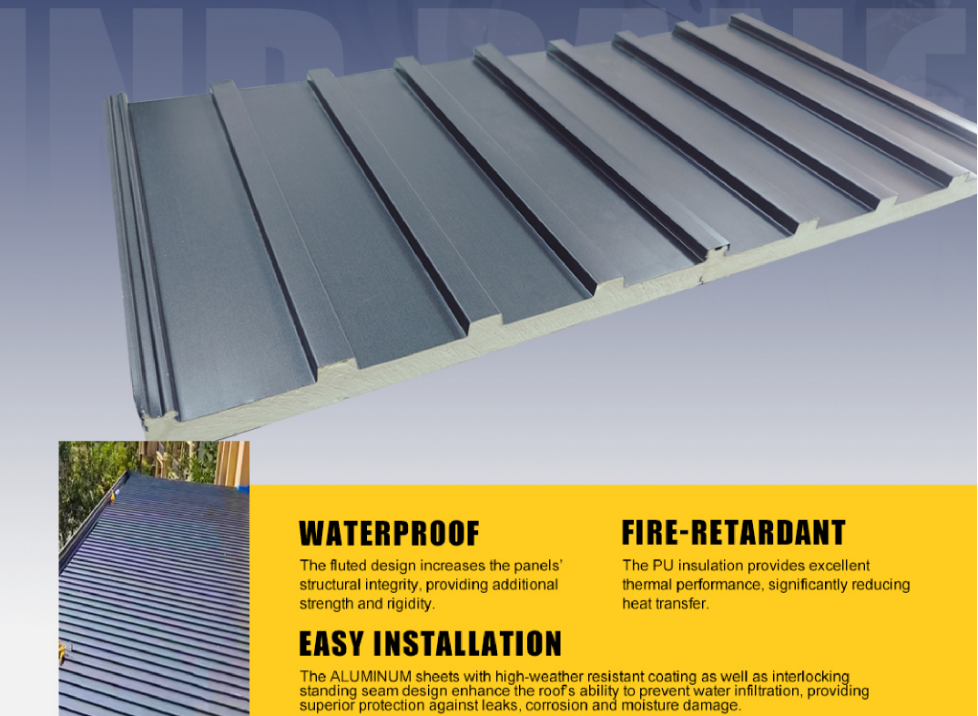
Table of Contents
What Are Fluted or Great Wall PU Insulated Roof Sandwich Panels?
Fluted PU insulated roof sandwich panels, often referred to as “Great Wall PU Roof panels” due to their ribbed profile, consist of three main layers: a top embossed or coated metal sheet, a rigid polyurethane (PU) insulation core, and a bottom metal or foil layer. These PU roof sandwich panels combine excellent insulation with mechanical strength, making them ideal for roofing applications that require durability, thermal efficiency, and fast installation.
Key Features and Benefits


1. Excellent Thermal Insulation
Thanks to the rigid polyurethane core, these roof panels offer outstanding thermal insulation, reducing heat transfer and maintaining interior comfort. This translates into lower energy costs and improved building efficiency.
2. Superior Load Bearing Capacity
The fluted design enhances structural strength, allowing the panels to withstand heavy loads such as snow accumulation or maintenance personnel walking on the roof.
3. Waterproof and Weather-Resistant
The jointing mechanism of the panels—often tongue-and-groove or hidden fastener design—ensures watertight sealing, preventing leaks and improving resistance to wind and rain.
4. Fast and Easy Installation
Great Wall PU insulated panels are manufactured in pre-defined lengths, enabling rapid installation with minimal labor. Their lightweight design reduces transportation and handling challenges.
5. Aesthetic Appeal
The fluted or Great Wall shape creates a clean, modern appearance suitable for visible roofing structures. Panels are available in a variety of colors and finishes.
6. Fire Retardant
PU foam cores are formulated with fire-retardant agents, offering resistance to ignition and slow flame spread, complying with various safety standards.
Applications
These panels are widely used in:
- Warehouse and industrial building roofs
- Prefabricated houses
- Commercial buildings and shopping malls
- Agricultural buildings
- Cold storage facilities
- Cleanrooms
Additionally, Fluted PU Roof Panels are often paired with Decorative PU Wall Sandwich Panels for complete insulation and visual uniformity across roofing and façade systems.
Technical Parameters


| Specification | Value |
|---|---|
| Panel Width | 1000 mm or customized |
| Effective Width | 500 mm / 950 mm |
| Thickness Range | 45 mm / 65 mm / 95 mm |
| PU Core Density | 40-45 kg/m³ |
| Top Face Material | Aluminum |
| Bottom Face Material | Aluminum |
| Thermal Conductivity | ≤ 0.022 W/(m·K) |
| Fire Rating | B1 / B2 (Optional) |
| Connection Type | Tongue and groove, hidden screw |
| Installation Orientation | Vertical / sloped |
Comparison with PU Wall Panels

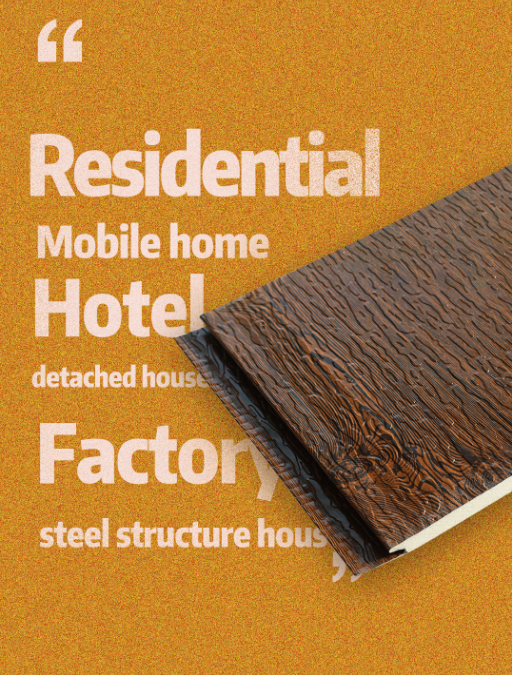
While the Fluted PU roof sandwich panels are optimized for horizontal roofing applications, PU Insulated Wall Sandwich Panels or Decorative PU Wall Panels are used vertically for external cladding and internal partitioning. Both share similar thermal and structural advantages, but wall panels often focus more on aesthetic textures, such as brick or stone patterns, and enhanced decorative value.
Environmental and Energy Benefits
PU sandwich panels reduce energy consumption by improving thermal performance and reducing reliance on HVAC systems. They are often recyclable and minimize on-site waste. Their long lifespan—often over 25 years—also means less frequent replacement and maintenance.
Emerging Trends and Innovations
Modern construction is increasingly moving toward flexible and modular solutions. In this context, PU insulated sandwich panels—especially fluted or Great Wall types—are being integrated into prefab container homes, portable shelters, and off-grid housing due to their insulation performance, strength, and transport efficiency.
Additionally, new coating technologies offer improved corrosion resistance and enhanced self-cleaning surfaces, further extending the product’s service life.
Integration with Other Metal Insulated Panel Systems
The fluted panel can be integrated with various building envelope systems, including:
- Unistrut channels for modular installations
- Solar channels to support solar panel mounting
- Container house wall sections using matching insulated panels
- Cassette-type panels for enhanced aesthetics and performance
This integration flexibility allows architects and engineers to design unified systems with mixed materials while maintaining thermal and structural performance.
Choosing the Right Panel for Your Project


When selecting PU insulated roofing solutions, factors such as panel thickness, coating type, core density, and installation method must be considered. If your project demands both visual appeal and structural functionality, Fluted or Great Wall PU insulated roof panels are a top-tier choice.
For façade matching, pairing these roof panels with Decorative PU Wall Sandwich Panels not only improves building thermal performance but also adds a harmonious, professional finish to any structure.
Fluted or Great Wall PU insulated roof sandwich panels combine form and function in an innovative roofing solution suitable for modern-day construction challenges. Their proven performance in insulation, durability, and visual aesthetics makes them a preferred option for builders, architects, and property developers aiming for efficient and stylish structures. As the demand for sustainable and high-performance materials grows, these panels continue to play a pivotal role in redefining the standards of roofing systems worldwide.