
Advanced Decorative Thermal Siding Panels for Energy-Efficient and Aesthetic Facades
Decorative thermal siding panels have become a popular solution for modern building envelopes, combining thermal insulation, architectural aesthetics, and structural durability in one integrated system. Widely used in residential, commercial, and industrial construction, these panels offer the visual appeal of traditional materials such as wood or brick while delivering superior performance and fast installation.
As demand grows for energy-efficient and visually distinctive façades, patterned metal thermal siding panels are increasingly replacing conventional wall cladding systems.

Table of Contents
Structure of Decorative Wall Siding Panels
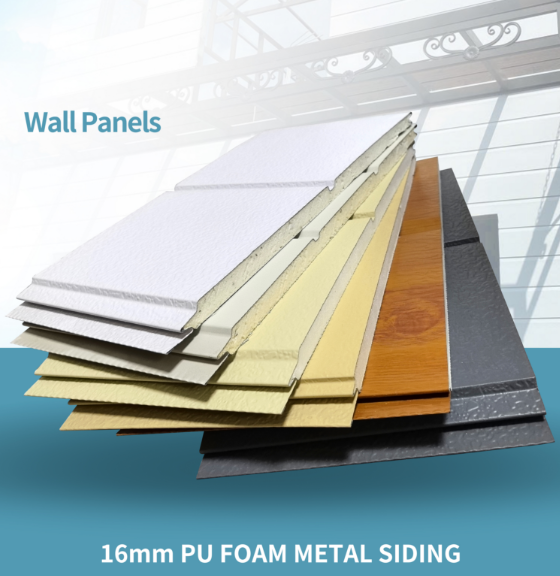
A decorative PU siding panel is typically a multi-layer composite panel, designed to provide both insulation and surface decoration. The standard structure includes:
- Outer decorative metal layer
Made of pre-painted galvanized steel, aluminum, or coated steel sheet. This surface is often embossed or profiled to create patterns such as: - Thermal insulation core
Common core materials include polyurethane (PU), Rockwool, or EPS, offering excellent thermal resistance and energy efficiency. - Inner protective or structural layer
This layer enhances rigidity, moisture resistance, and overall panel strength.
The composite structure allows decorative thermal siding panels to function as both exterior cladding and insulation, reducing the need for additional wall layers.
Key Functions of Exterior Thermal Siding Panels
Decorative metal thermal siding panels are designed to fulfill multiple functions simultaneously:
- Thermal insulation, reducing heat loss in winter and heat gain in summer
- Weather protection, resisting wind, rain, UV exposure, and temperature fluctuations
- Architectural decoration, enhancing building appearance with embossed patterns and colors
- Structural protection, shielding the building envelope from mechanical damage
This multifunctional performance makes thermal siding panels ideal for both new construction and renovation projects.
Advantages of Patterned Metal Thermal Siding Panels

Compared with traditional wall finishes, decorative metal thermal siding panels offer several significant advantages:
1. High Energy Efficiency
Thanks to the insulated core, these panels significantly improve building energy performance, helping reduce heating and cooling costs.
2. Attractive Decorative Appearance
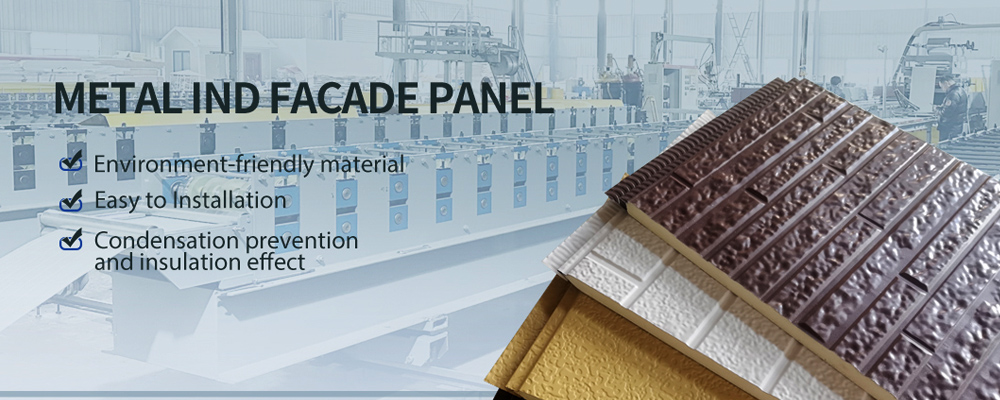
With options such as wood grain insulated metal siding, brick-pattern thermal wall panels, and custom embossed metal siding panels, designers can achieve high-end aesthetics without using heavy or fragile materials.
3. Lightweight and Durable
Metal thermal siding panels are lightweight yet strong, making them suitable for both steel structures and traditional masonry buildings.
4. Fast Installation
The modular panel design allows for quick installation, reducing construction time and labor costs.
5. Low Maintenance
The coated metal surface resists corrosion, fading, and cracking, requiring minimal long-term maintenance.
Dimensions and Technical Specifications
Decorative thermal siding panels are available in various dimensions to suit different projects:
- Panel thickness: commonly 16 mm to 30 mm (depending on insulation type)
- Metal skin thickness: typically 0.23–0.35 mm
- Panel width: often 380 mm, 450 mm, or customized widths
- Panel length: custom-made, usually up to 6,000 mm
These flexible dimensions allow manufacturers to tailor panels for residential villas, commercial buildings, and industrial facilities.
Applications of Decorative Thermal Siding Panels
Decorative thermal siding panels are widely used across different construction sectors:
- Residential buildings (villas, houses, apartment exteriors)
- Prefabricated and modular buildings
- Commercial façades (offices, retail centers, hotels)
- Industrial buildings and warehouses
- Renovation and façade upgrade projects
The combination of insulation and decoration makes them especially suitable for energy-efficient building upgrades.
Why Patterned Metal Thermal Siding Panels Are in Demand

Modern construction increasingly emphasizes sustainability, energy efficiency, and visual identity. Patterned metal thermal siding panels meet these requirements by offering:
- A balance between design flexibility and functional performance
- Consistent quality through factory-controlled production
- Compatibility with modern roll forming and panel production lines
As a result, these panels are becoming a standard choice in contemporary architectural design.
Frequently Asked Questions (FAQ)
1. What is a decorative thermal siding?
It is an insulated wall panel that combines thermal insulation and decorative metal cladding in a single product.
2. What patterns are available for PU metal siding panels?
Common patterns include wood grain, brick, stone, and custom embossed designs.
3. Are PU cored IND panels suitable for cold climates?
Yes, the insulated core provides excellent thermal resistance, making them ideal for cold and variable climates.
4. What insulation materials are used?
PU, PIR, and EPS are commonly used insulation cores.
5. Can these panels be used for renovation projects?
Yes, they are lightweight and easy to install, making them suitable for façade renovation.
6. How long do metal thermal siding panels last?
With proper coating and installation, they typically have a long service life of 20–30 years or more.
7. Are custom dimensions available?
Yes, panel length, width, and pattern can be customized according to project requirements.
8. Do decorative thermal siding panels require frequent maintenance?
No, they are low-maintenance compared to traditional wall finishes.