

IND Panel : Insulation and Decoration for Exterior Wall
What is an IND Panel? Understanding Insulated and Decorative Wall Panels
In the construction and building materials industry, you may often come across the term “IND panel.” Many people mistakenly assume that “IND” refers to India. However, this is not the case. IND stands for Insulation and Decoration Panel — a modern, high-performance metal wall and roof cladding solution that combines thermal insulation with architectural decoration.
These panels are widely used as the pu insulated wall cladding or thermal metal siding on both residential and commercial buildings around the world, providing a lightweight, energy-efficient, and aesthetically versatile alternative to traditional building materials such as brick, stone, or wood.
Table of Contents
Breaking the Misconception: IND ≠ India
Before diving into the technical details, it is essential to clarify a common misunderstanding.
- IND does not represent India.
- IND = Insulation and Decoration.
This acronym highlights the panel’s two core functions:
- Insulation – Delivering excellent thermal performance to reduce energy loss.
- Decoration – Offering a wide range of surface textures, colors, and finishes to enhance architectural design.
By keeping this meaning in mind, professionals and customers can correctly identify what an IND panel is and why it is increasingly popular in modern construction projects.
Composition of IND Panels
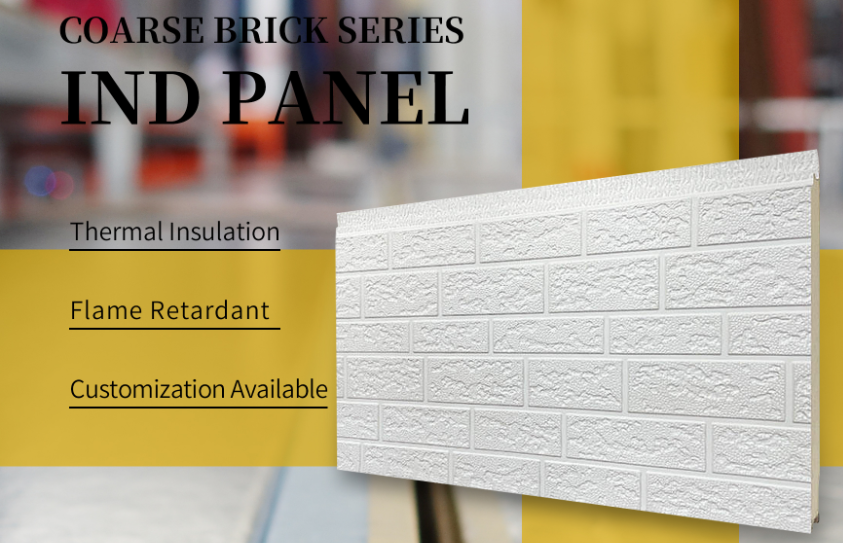
An IND panel is a composite material, typically made of three layers:
- Surface Layer (Metal Sheet or Decorative Film):
- Often made of pre-coated aluminum-zinc steel or embossed aluminum sheets.
- Designed with decorative finishes that imitate brick, stone, wood grain, ceramic tiles, or modern metallic looks.
- Provides weather resistance, durability, and aesthetic versatility.
- Core Insulation Layer:
- Commonly Polyurethane (PU) foam for high thermal efficiency.
- Ensures low thermal conductivity (around 0.022–0.028 W/m·K).
- Helps regulate indoor temperature, reduce energy consumption, and improve comfort.
- Inner Protective Layer:
- Aluminum foil, protective coating, or fiberglass material.
- Provides moisture resistance, stability, and structural bonding.
This sandwich structure creates panels that are lightweight, strong, and highly functional.
Key Features of Insulated and Decorative Wall Panels

- Superior Thermal Insulation
The 16mm thick polyurethane foam core of this thermal insulation wall panel dramatically reduces heat transfer, keeping buildings cooler in summer and warmer in winter. - Aesthetic Flexibility
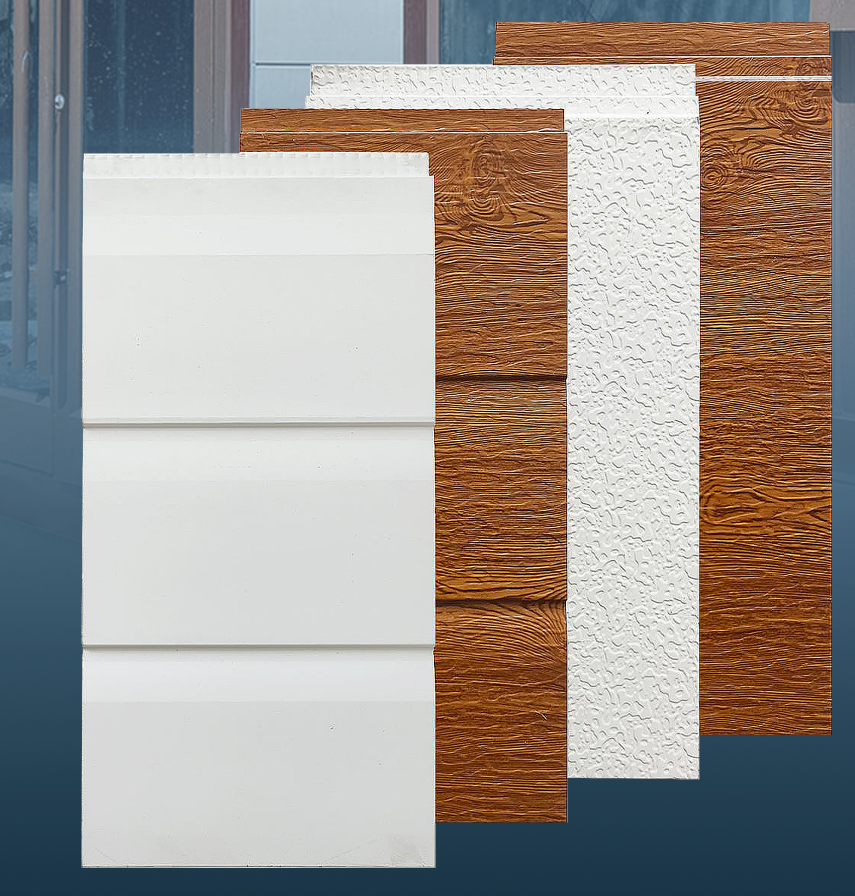
Available in a variety of textures and colors, including brick patterns, stone effects, wood grain, stucco effects and metallic finishes. This eliminates the need for secondary surface treatments. - Durability and Weather Resistance
The metal surface coating provides resistance against UV rays, corrosion, and harsh weather, extending the building’s lifespan. - Lightweight and Easy Installation
Compared to traditional brick or stone, Insulated metal wall panels are much lighter, which reduces structural load and speeds up installation. - Environmentally Friendly
Lower energy consumption for heating and cooling contributes to sustainability. Panels are also recyclable at the end of their service life.
Applications of IND Panels
IND panels, or known as PU insulated Wall claddings, are versatile and used across multiple sectors:
- Residential Housing: External wall cladding for new homes and renovation projects.
- Commercial Buildings: Offices, shopping malls, hotels, and exhibition centers benefit from energy efficiency and modern aesthetics.
- Industrial Facilities: Warehouses, factories, and workshops where both insulation and exterior protection are required.
- Public Infrastructure: Schools, hospitals, and government buildings use IND panels for their balance of durability and decoration.
Why Choose IND Panels Over Traditional Materials?
- Time Efficiency: Panels are prefabricated decorative metal siding, reducing on-site construction time.
- Lower Costs: Faster installation and lower energy bills lead to significant cost savings.
- Better Design Freedom: A wide range of decorative finishes allows architects to achieve diverse design goals without additional surface treatments.
- Performance: Unlike single-layer materials, IND panels combine strength, insulation, and beauty in one product.
Insulated and Decorative Wall Panels vs. Standard PU Sandwich Panels
While both IND panels and PU sandwich panels share similarities, there are differences worth noting:
- PU Sandwich Panels: Typically used for industrial roofs and walls, focusing on thermal insulation and structural strength. Their surfaces are usually flat or trapezoidal, designed for function over appearance.
- IND Panels: In addition to insulation, they emphasize decorative finishes such as brick, stone, or wood imitation. They are more suitable for exterior cladding where appearance matters.
Thus, thermal insulation wall panels can be seen as an upgraded form of insulated panels, integrating both thermal performance and architectural decoration.
IND Panels: Thermal Metal Siding

To summarize, IND panels are not related to India at all. The term IND stands for Insulation and Decoration Panel, highlighting their unique role in modern construction. With a three-layer structure consisting of a durable decorative surface, polyurethane foam insulation core, and protective inner layer, IND panels provide superior insulation, aesthetic flexibility, durability, and easy installation.
As more builders and architects seek energy-efficient and visually appealing materials, thermal metal siding are becoming a preferred choice for residential, commercial, and industrial applications. They offer the perfect balance between function and design, making them a cornerstone of the new era in building materials.
If you are looking for an exterior wall solution that combines thermal insulation and decorative design in one product, IND panels deliver exactly that.
FAQS ABOUT IND PANELS?
1. What does IND stand for in IND panel?
IND stands for Insulation and Decoration, not India. Insulated and decorative wall panels are composite building materials designed to provide both thermal insulation and architectural decoration for walls and facades.
2. Are IND panels the same as PU sandwich panels?
Not exactly. While both use polyurethane foam for insulation, PU sandwich panels are mainly functional with flat or trapezoidal profiles, while IND panels combine insulation with decorative finishes such as brick, stone, or wood grain.
3. What materials are used in IND panels?
An IND panel typically consists of:
- A pre-coated or embossed metal surface for decoration and durability.
- A polyurethane (PU) or PIR foam core for insulation.
- An inner protective layer such as aluminum foil for moisture resistance.
4. Where are IND panels commonly used?
IND panels are widely applied as thermal metal siding or PU insulated wall cladding in residential housing, commercial buildings, industrial warehouses, and public infrastructure like schools or hospitals, offering energy efficiency and visual appeal.
5. What are the advantages of Thermal Insulation Wall Panels?
- High thermal insulation performance
- Decorative surface options (brick, stone, wood, metallic, etc.)
- Lightweight and quick to install
- Weather-resistant and durable
- Environmentally friendly with energy savings
6. Why choose IND panels over traditional materials?
Unlike brick, stone, or wood, IND panels are lighter, faster to install, and provide insulation and decoration in one product. They reduce construction time, cut energy bills, and offer modern design flexibility.