
Thermal Insulated Metal Wall Panels | Exterior Decorative Siding Panels
Thermal Insulated Metal Wall Panels: Lightweight & Energy-Efficient
Our PU insulated siding panels are designed with advanced polyurethane insulation, delivering thermal efficiency, soundproofing, and moisture resistance in one solution.
Key Specifications:
- Thickness: 16 mm
- Available Widths: 383 mm & 400 mm
- Standard Lengths: 2900 mm & 3850 mm (optimized for container shipping)
- Surface: 0.25 mm Aluzinc-coated steel with high-durability polyester paint
- Durability: Colorfast for 8–10 years, corrosion resistance for 10–15 years
These panels are particularly popular for residential projects, including modular houses, tiny homes, and prefabricated housing solutions. Their B-grade fire resistance ensures safety, while the insulated core helps reduce energy bills by maintaining indoor comfort in both summer and winter.

Table of Contents
Rockwool Insulated Metal Siding: Superior Fire Resistance
For applications that require maximum fire protection, Rockwool insulated siding panels are the preferred choice. With excellent non-combustible properties, Rockwool panels are suitable for buildings that demand enhanced fire safety without compromising on insulation and appearance.
Rockwool panels also provide exceptional sound absorption and noise reduction, making them ideal for commercial renovations, office buildings, and high-rise retrofits.
Versatile Applications

The versatility of pu insulated metal siding allows it to be applied across a wide range of industries and building types:
Residential Construction
- Modular homes
- Tiny houses
- Prefabricated housing projects
Commercial Buildings
- Office façade renovation
- Outdoor retail kiosks and food stalls
- Elevator shaft enclosures in older buildings
Public & Industrial Use
- Schools, hospitals, and community centers
- Warehouses and logistic hubs
- Energy-efficient retrofits for old factories
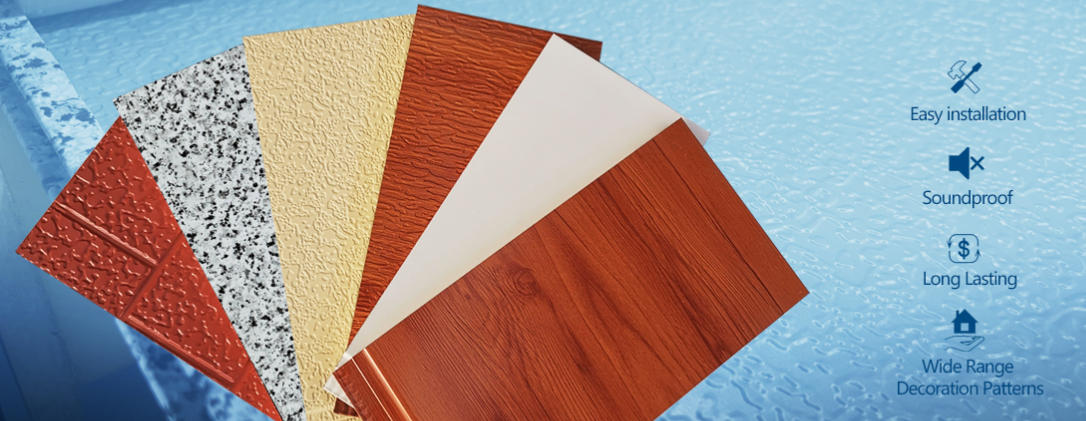
With over 100 decorative surface textures and patterns available, these siding panels not only enhance building performance but also provide aesthetic flexibility that meets modern design expectations.
Benefits of Thermal Insulated Metal Wall Panel

- Thermal Insulation – Keeps interiors warm in winter and cool in summer, reducing HVAC costs.
- Soundproofing & Noise Reduction – Ideal for urban environments and roadside buildings.
- Waterproof & Moisture Resistant – Protects building structure against humidity and rain.
- Fire Resistance – PU siding with B-grade fire resistance; Rockwool siding with non-combustible safety.
- Durability – Aluzinc-coated steel with polyester paint ensures 10–15 years of anti-rust performance.
- Aesthetic Options – Hundreds of finishes including brick, stone, wood grain, and custom designs.
- Easy Installation – Lightweight panels designed for modular and prefabricated projects.
Why Choose PU or Rockwool Insulated Metal Siding?

When selecting exterior wall solutions, two of the most reliable and widely used options are PU (Polyurethane) insulated siding panels and Rockwool insulated siding panels. Both materials serve distinct purposes depending on your project’s design goals, safety requirements, and energy-saving targets.
1. PU Insulated Metal Siding
- Lightweight yet durable – PU panels are much lighter compared to mineral-based options, which makes them easier to transport, handle, and install. This can reduce overall construction time and labor costs.
- Superior thermal insulation – With a low thermal conductivity, PU panels deliver excellent energy efficiency, helping buildings reduce heating and cooling expenses over time.
- Moisture and corrosion resistance – Thanks to their closed-cell structure and metal cladding, PU siding provides strong protection against moisture infiltration, mold growth, and rusting.
- Modern aesthetics – Available in various decorative patterns, colors, and finishes, PU insulated siding can enhance building facades with both functional and architectural appeal.
2. Rockwool Insulated Metal Siding
- Outstanding fire resistance – Rockwool is a non-combustible material that can withstand extremely high temperatures, making it the preferred choice in projects where fire safety is critical.
- Excellent soundproofing – The fibrous structure of Rockwool makes it an ideal solution for noise control, especially for buildings located near highways, airports, or industrial zones.
- Durability under harsh conditions – Rockwool siding panels maintain their performance even under extreme weather changes, offering long-term stability for both commercial and industrial projects.
- Eco-friendly performance – Made from natural basalt rock, Rockwool is sustainable, recyclable, and contributes to greener building certifications.
3. Shared Advantages
- Fast installation – Both PU and Rockwool insulated siding panels are manufactured with precision in roll forming lines and can be quickly assembled on-site.
- Versatile applications – Suitable for residential homes, office buildings, factories, warehouses, and renovation projects.
- Long service life – Their combined strength of metal cladding and insulated core ensures high structural integrity and lasting performance.
👉 In short:
- Choose PU insulated siding if your project focuses on lightweight, energy efficiency, and decorative appeal.
- Choose Rockwool siding if your project prioritizes fire resistance, soundproofing, and maximum safety.
Both materials are proven solutions for modern architecture, offering cost savings, durability, and enhanced building comfort.
Frequently Asked Questions (FAQ)
1. What is the difference between PU insulated siding and Rockwool insulated siding?
PU insulated siding is lightweight, energy-efficient, and cost-effective, while Rockwool siding offers superior fire resistance and sound absorption.
2. How long does insulated metal siding last?
With proper installation and maintenance, PU insulated siding lasts 15–20 years, while Rockwool siding can exceed 25 years in durability.
3. Is insulated metal siding waterproof?
Yes. Both PU and Rockwool panels are designed with water-resistant coatings and moisture-proof insulation cores.
4. Can insulated siding be used for high-rise buildings?
Absolutely. Rockwool insulated siding is especially suitable for high-rise projects due to its non-combustible properties.
5. What decorative finishes are available?
We provide more than 100 styles, including brick, stone, marble, and wood patterns, allowing flexible design choices.
6. Is PU insulated siding safe against fire?
PU siding is rated as B-grade fire resistant, providing reliable protection for residential and light commercial projects.
7. Can these panels be customized in length and size?
Yes. While 2900 mm and 3850 mm are optimized for container shipping, we can provide customized lengths upon request.
8. Are insulated metal sidings suitable for renovation projects?
Yes, they are widely used for exterior renovations, office façade upgrades, and modular retrofits.
The core information
Thermal insulated metal siding or IND facade panel is more than just a wall covering—it is an energy-efficient, durable, and aesthetically versatile solution that meets the evolving needs of residential and commercial construction. Whether you choose PU insulated siding for lightweight thermal performance or Rockwool siding for ultimate fire resistance, you can be confident in achieving long-lasting building protection and design flexibility.
If you are planning a new project or upgrading your existing façade, our insulated metal siding panels provide the ideal balance between performance, safety, and appearance.
👉 Contact us today for a free quotation and technical consultation.